Abstract
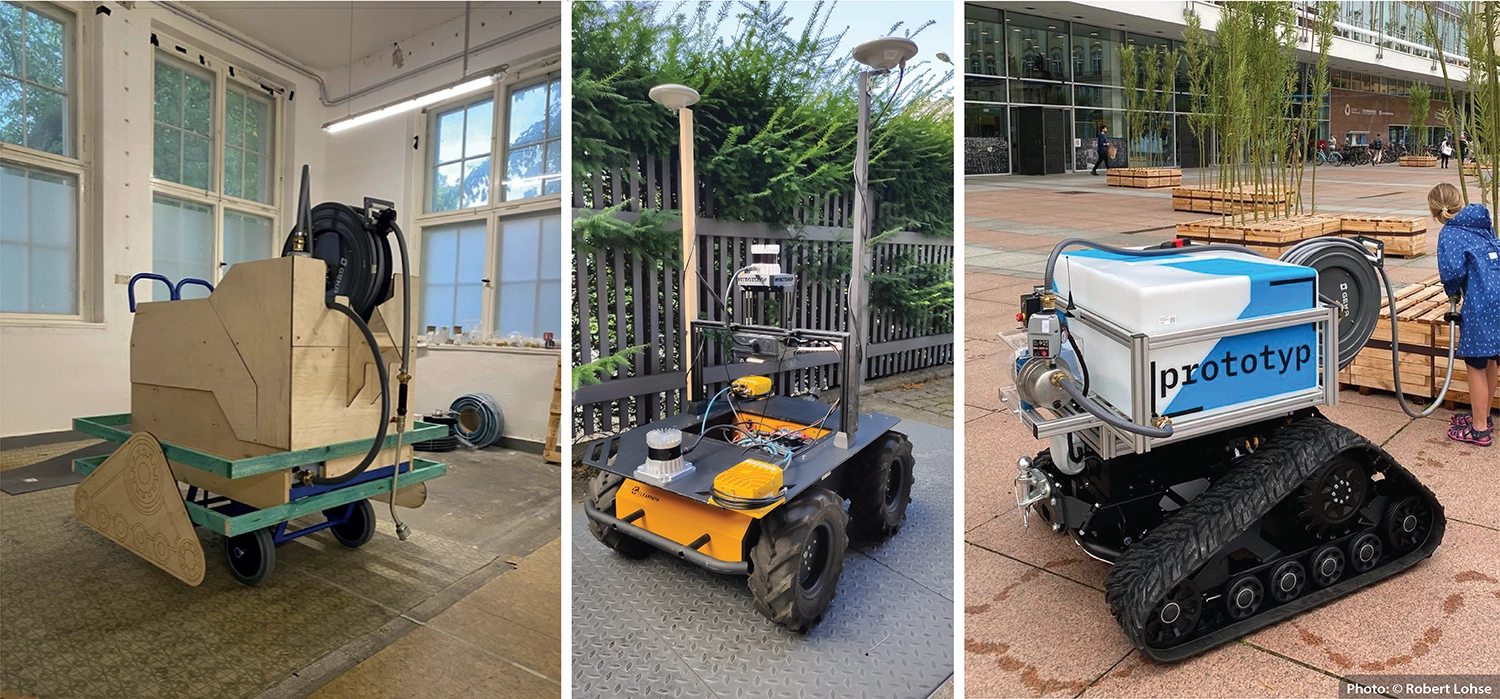
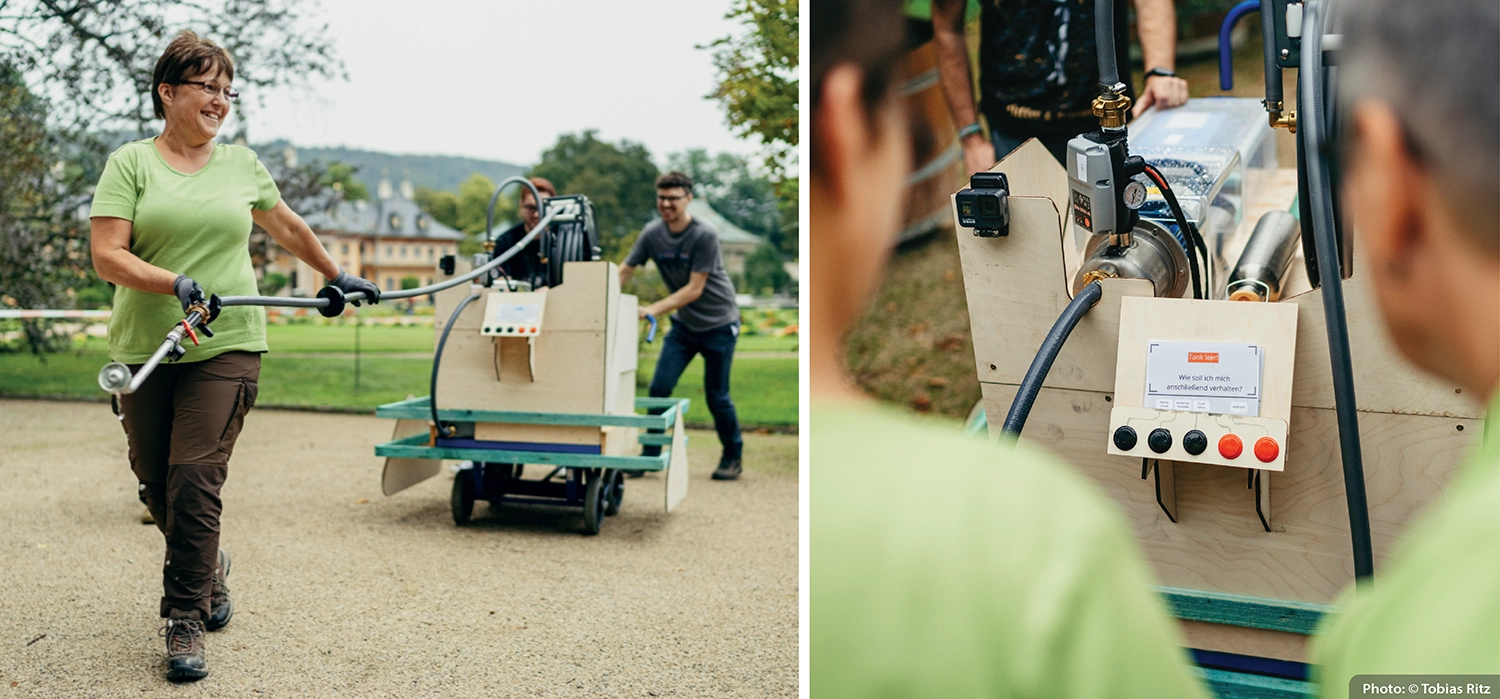
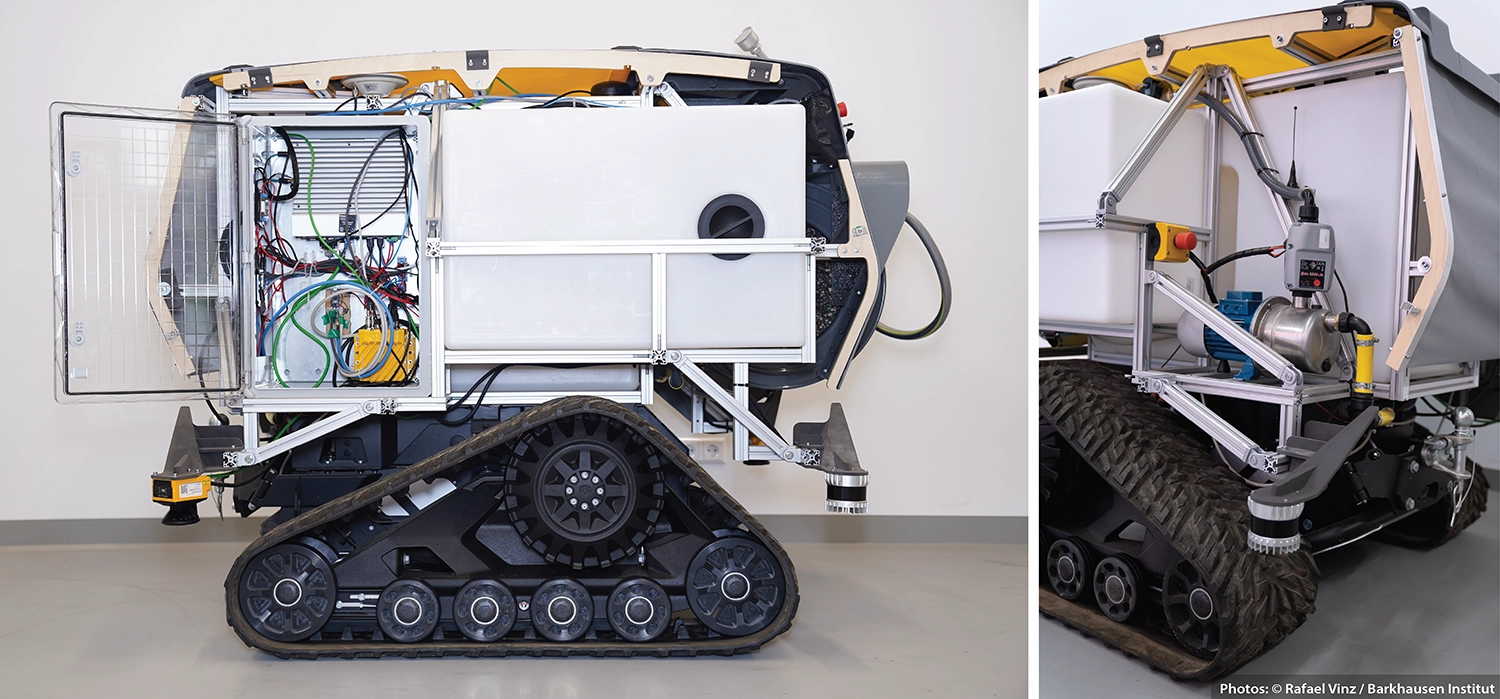
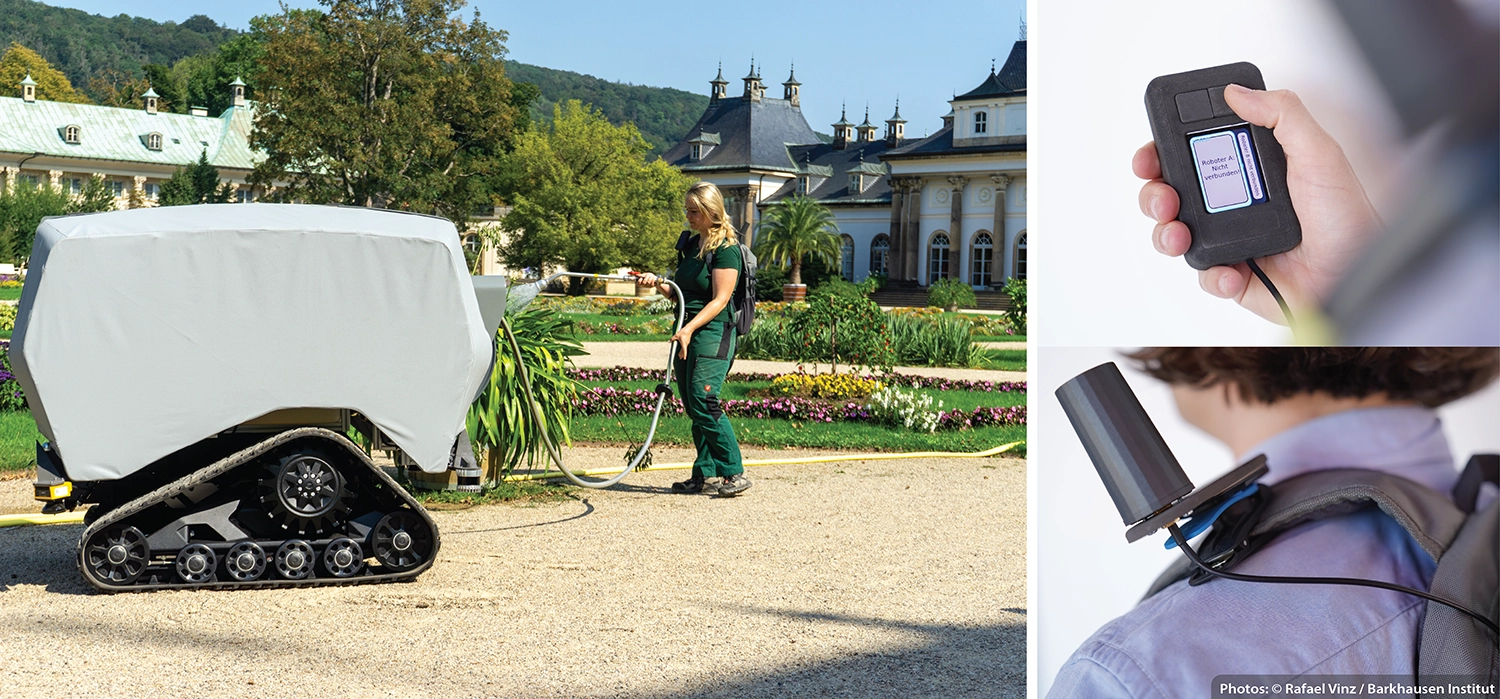
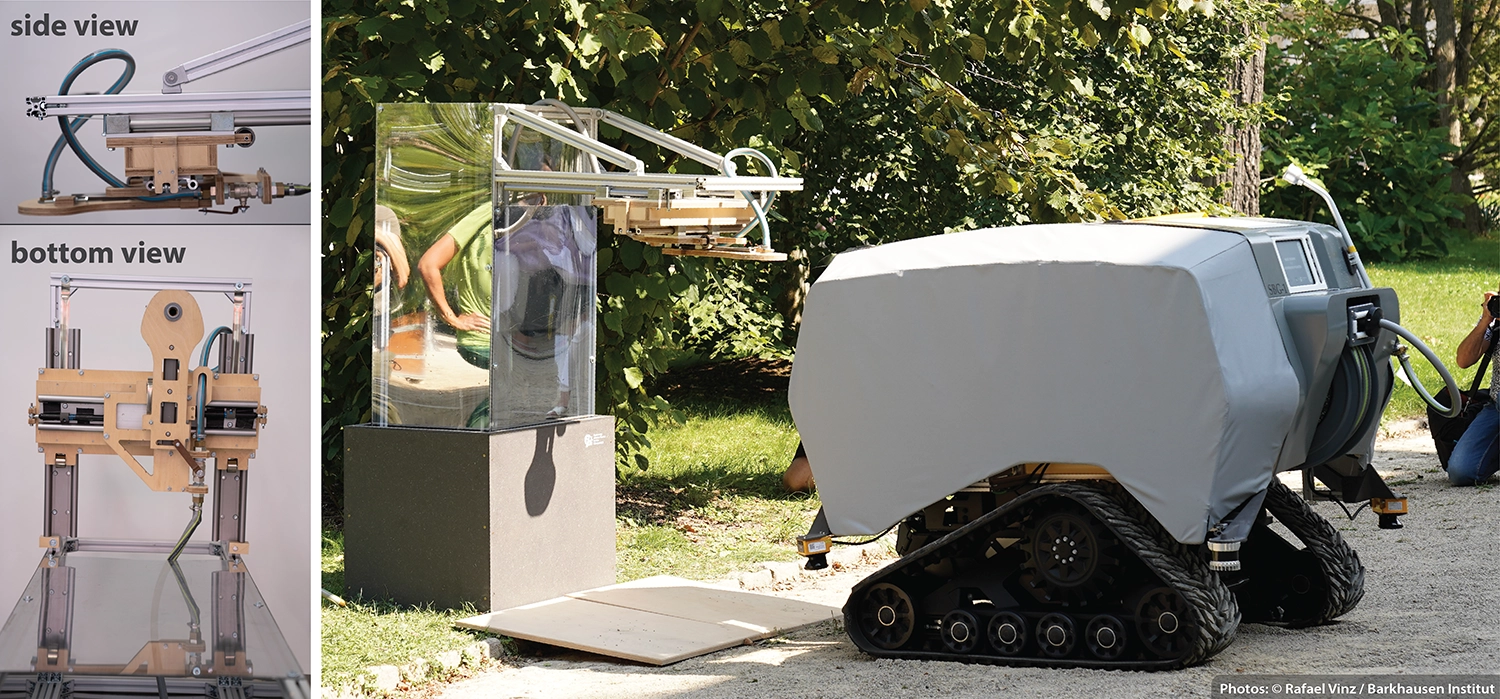
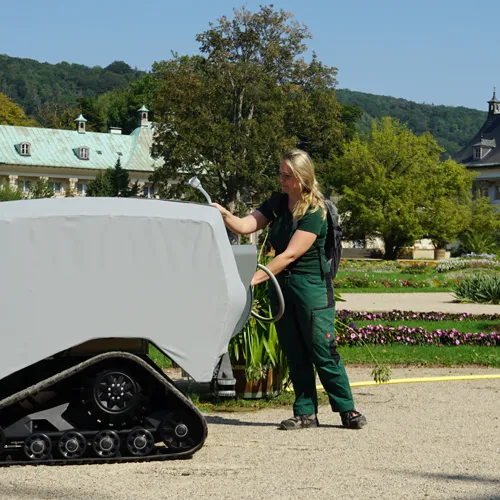
The workload of professional gardeners caring for public parks is increasing continuously due to climate change. We present a comprehensive case study showcasing how an interdisciplinary team of practitioners, designers and engineers developed a semi-automated robot to reduce the physical burden on gardeners, allowing them to better focus on their expertise and reduce water consumption. To identify appropriate design goals for a supportive robot, we conducted a requirements analysis that comprised practitioner workshops, public citizen discussions and low-fidelity mock-ups. Based on the clustered requirements, we present the concept of an accompanying robot that is capable of carrying water, providing a mobile water hose, following a gardener and refilling itself autonomously. To demonstrate the technical feasibility, we built an advanced prototype and describe the realization of navigation, mechanics and UI parts. Finally, we presented the prototype in a historic garden to gain further insights and report on lessons learned.
Related Publications
In Adjunct Proceedings of the 5th Annual Symposium on Human-Computer Interaction for Work (CHIWORK). ACM, 2026.
Publisher
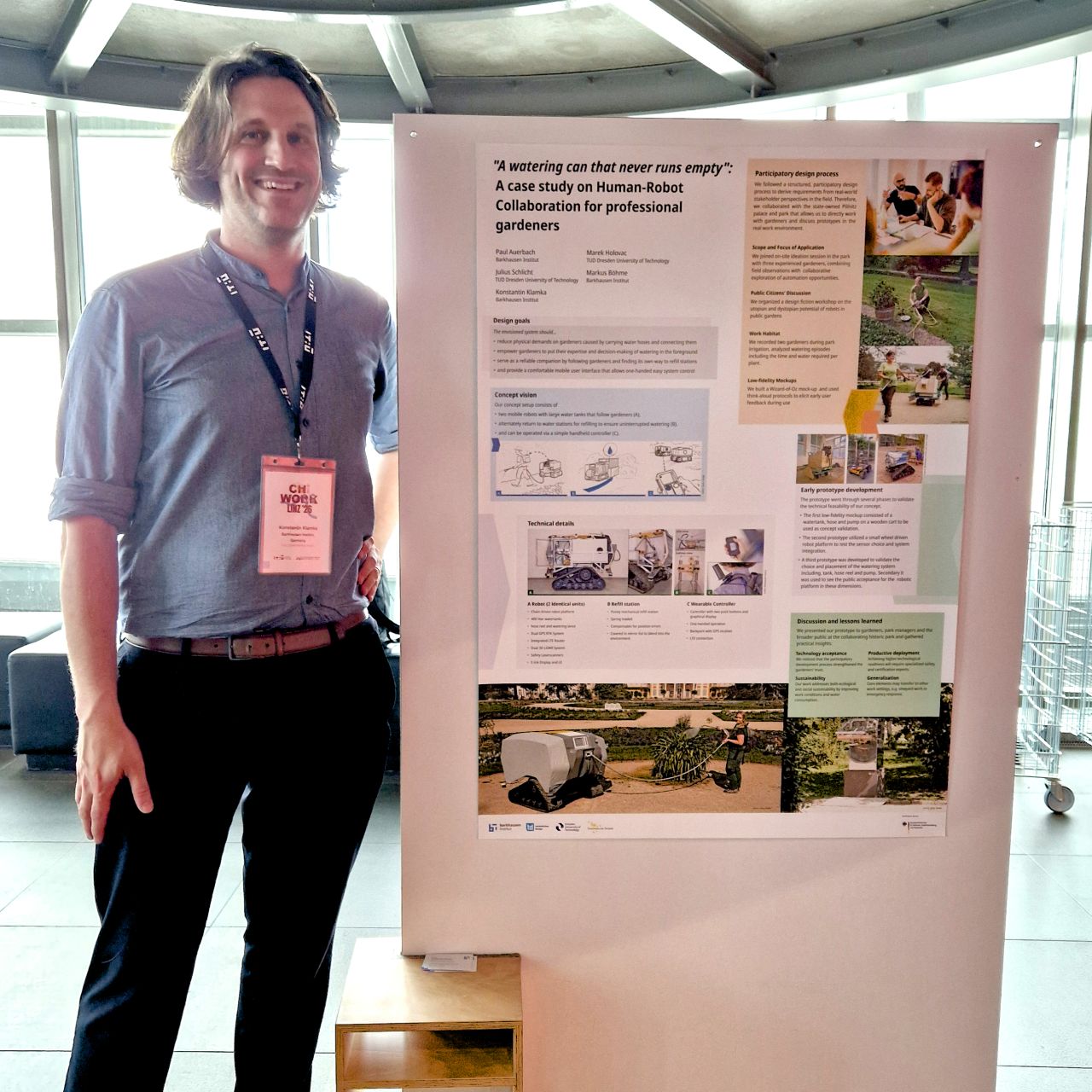
"A Watering Can That Never Runs Empty":
A Case Study on Human-Robot Collaboration for Professional Gardeners
| Category | Robotics |
|---|---|
| Project date | 2022-2025 |
| Collaborators |
|
| Technologies and Methods |
GPS-RTK LiDAR human-robot collaboration participatory design case study |
Presentation at CHIWORK 2026
in Linz, Austria.